
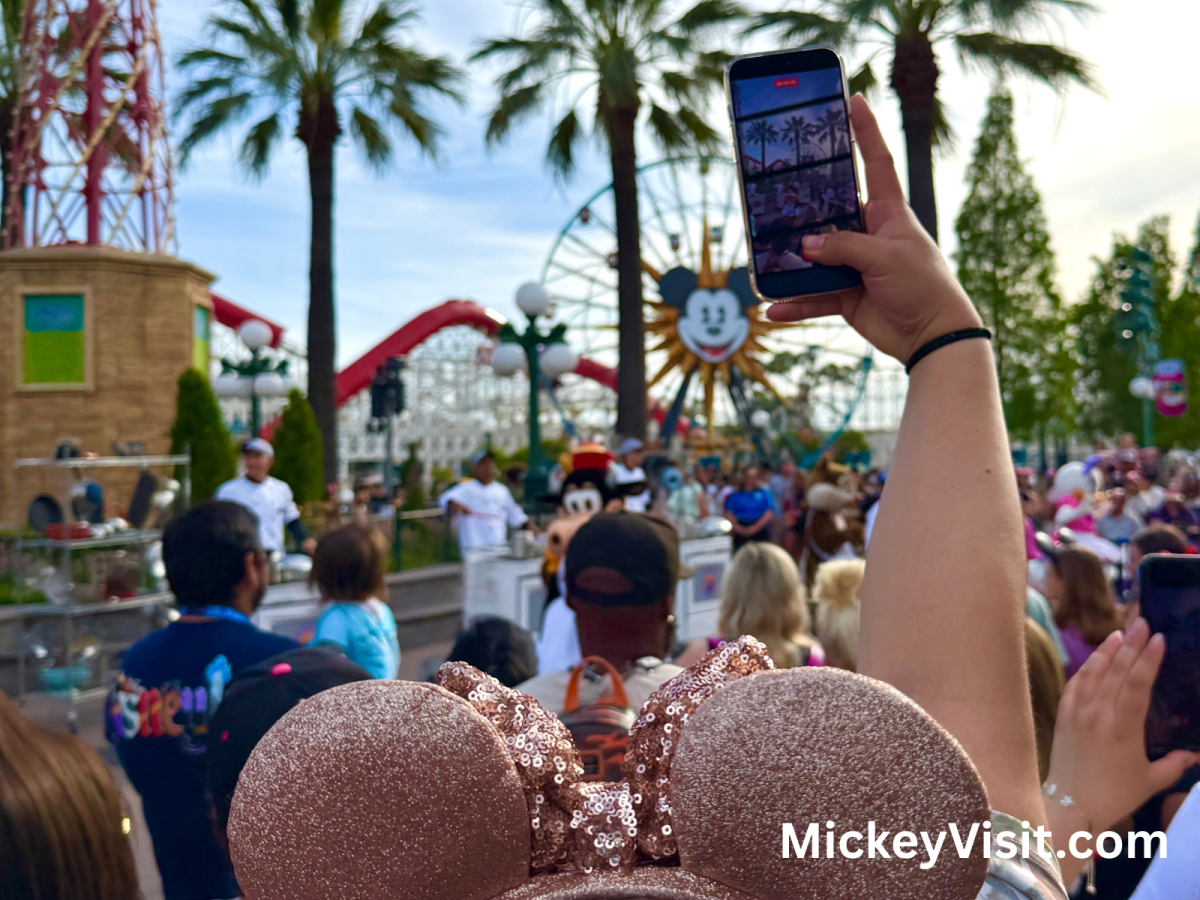
Disney YouTubers are a central part of the community sharing Disney content on the internet. They frequently share park experiences, tips, updates, and entertainment centered around visits to Disney parks and resorts. Behind the scenes of content creators in the Disney Parks is a growing conversation about the unspoken and official rules that come with filming in the country’s most visited theme parks.
This increase in video content has brought its own controversy, as a debate has emerged over what constitutes proper filming etiquette and how Disney should manage filming rules in its theme parks. To better understand creator perspectives, we interviewed Disney YouTubers about official park rules, their personal filming ethics, and how they balance content creation with the guest experience. Mickey Visit brings you the latest Disney news and planning resources, including the new Disneyland popcorn buckets available now and the huge changes coming to Disney World this May.
READ MORE – Here’s a Secret Way to Skip the Line For This Hidden Gem Attraction at Disney California Adventure
Disney’s Rules on Filming in Theme Parks
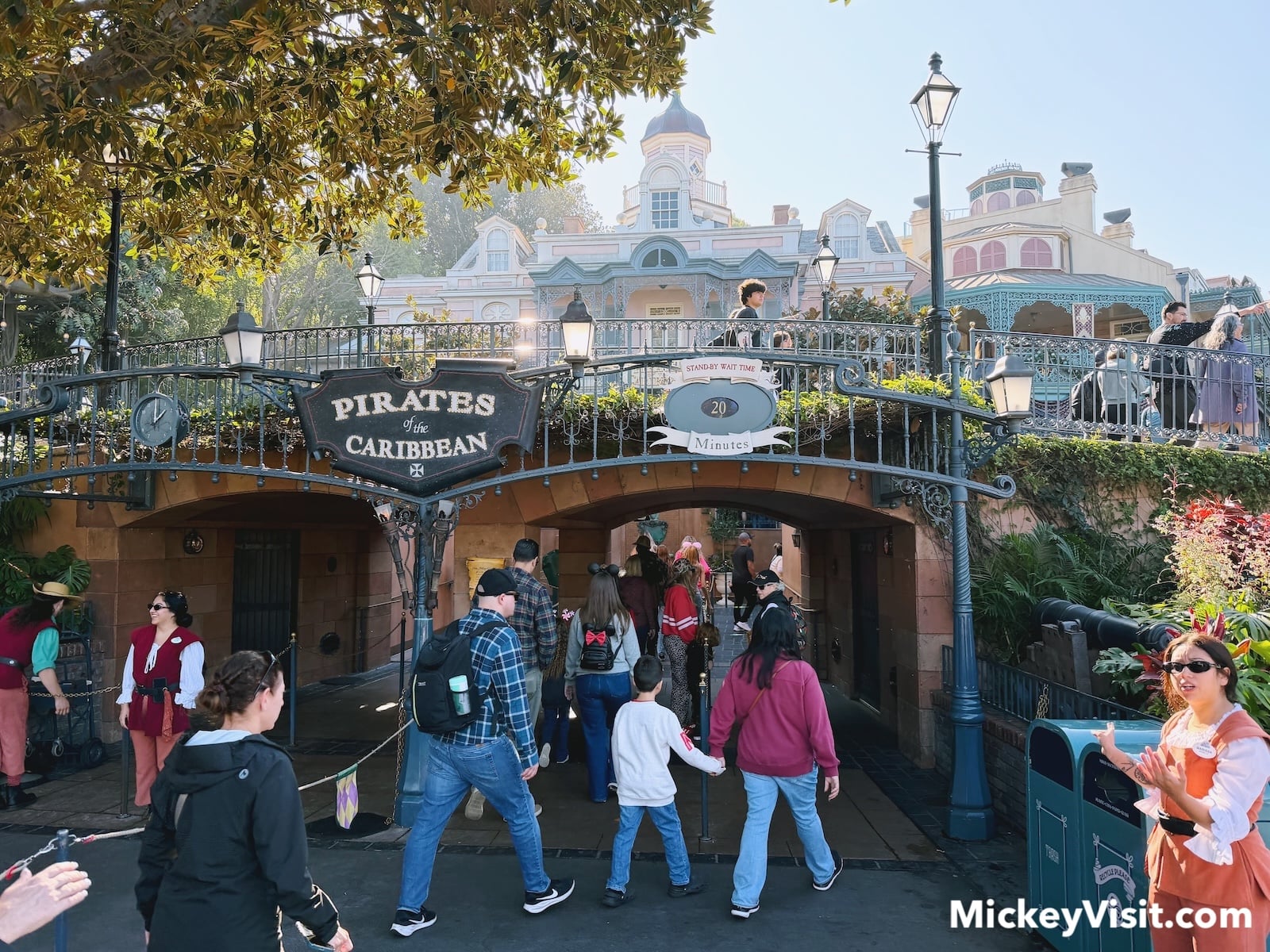
Content creation at Disneyland and Walt Disney World has exploded since 2020, and this has influenced the way that Disney manages their rules around filming. Before 2020, it was common for Disneyland security to remind guests of the rules around filming in the theme parks when they saw guests entering with recording devices with a clear intent to create content. But now that no longer seems to be the case, likely because content creation in the theme parks and video capture generally has become far more common.
Disney World Ride Closure ALERTS, Major Park Changes, Secrets Revealed
Get alerts on closures, park changes, exclusive discounts, and free printables. Trusted by 100,000+ Disney fans & planners.
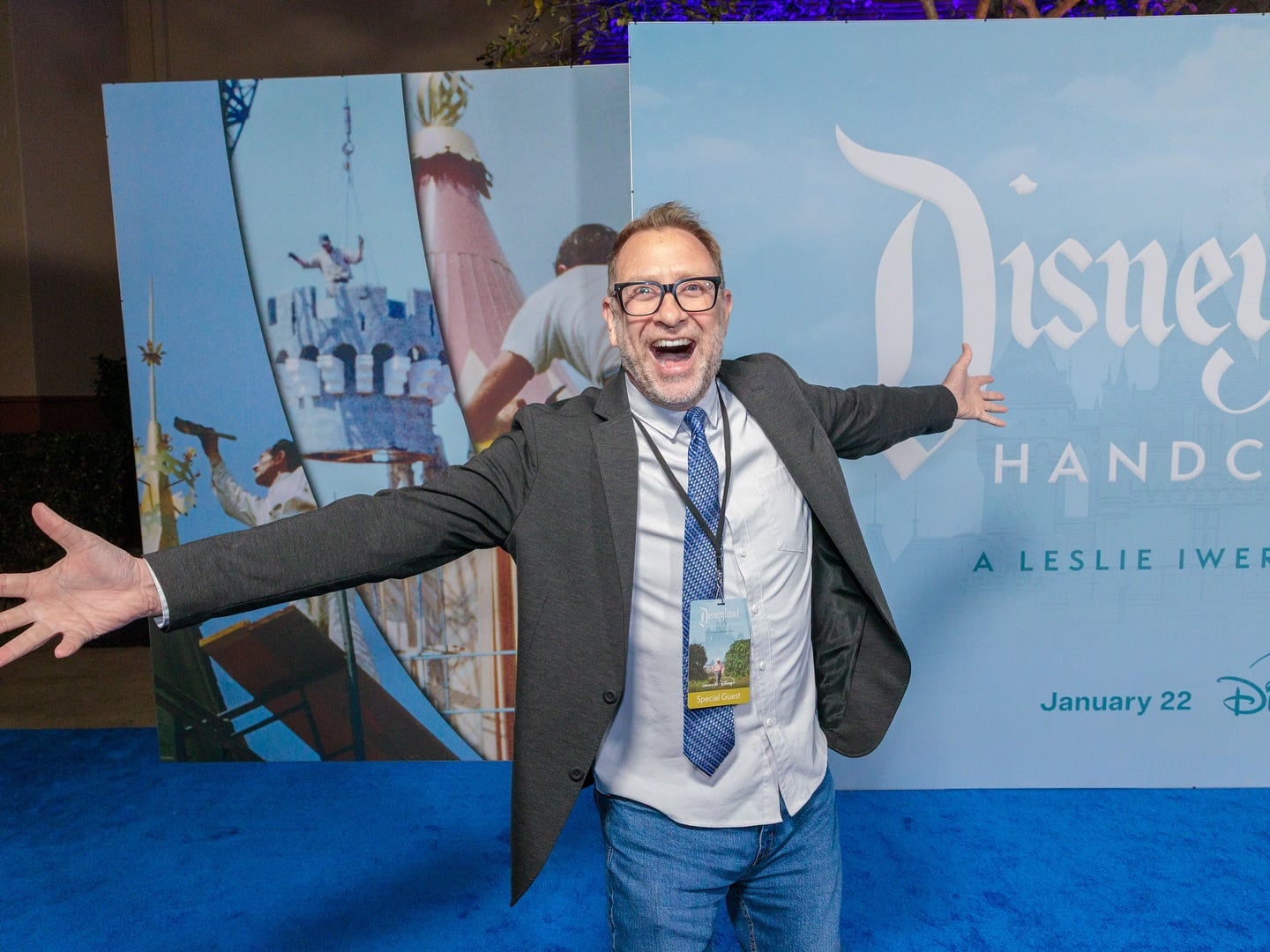
We spoke with Chris Provost, the YouTube creator behind the extremely popular Provost Park Pass channel, who told us about this shift in experience for creators who are seen entering with clear intentions to film. According to Chris, “When I first started YouTubing, there weren’t a lot of YouTubers back then, and when I would go through security, Disney would kind of review the rules.” He is the one who shared it was common for security to share the rules when they saw someone with a camera.
Some of these rules include not interfering with attractions, walkways, or inconveniencing other guests. But some rules are specific to cast members, whom Disney treats as part of an operational environment, so they are not meant to be public interview subjects without permission.
Chris explains, “For example, I don’t approach cast members and just put them in camera without their permission. If a cast member comes up to me and is talking to me while I’m filming, then that’s OK to do that.” This was the guidance Disney Security actively shared with guests before the 2020 closure. Chris noted he followed these rules carefully: “I would never go in and just like hijack a cast member and videotape them. I don’t think Disney likes that. I don’t think the cast members generally like that. I like to treat them with a lot of respect.”
Since 2021, it appears Disney is less frequently reminding guests of filming guidelines when they enter the parks with cameras, likely because content creation has become much more common. It would take far too much time for security to remind so many guests of these rules. Chris shared that he still makes an effort to follow Disney’s filming guidelines that they shared with him before the 2020 closure, adding, “They don’t really talk to people about the rules. They don’t do that anymore.”
What YouTubers Consider Proper Filming Etiquette

Disney YouTubers are increasingly adopting personal filming guidelines to balance content creation with preserving the overall guest experience in their own set of rules for proper filming etiquette. Chris shared with us his insights on the rules he follows. Some of this etiquette includes not speaking when he’s filming on attractions and also making an effort to ensure he has his own ride vehicle on attractions like the Haunted Mansion or Pirates of the Caribbean.
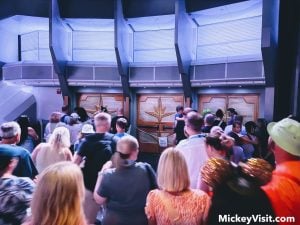
This sentiment was also shared by David Erickson, the YouTube creator behind Fresh Baked, who explained this is one of his own rules when filming, “When I’m on a ride itself, I never speak. I never speak when I’m on a ride.” He also shared his own set of etiquette around ride queues, noting how filming in those spaces can be more disruptive to guest experience and more intrusive.
David explains, “When I’m in a queue, I’m filming, but it’s just B-roll. And I don’t speak when I’m in a queue unless I can do it, like I’ll wear a mic. And I’ll speak in a really low register.” B-roll is a term used by creators for extra or supplementary footage. Along with being considerate about audio, David also describes his method for protecting visual privacy in queues, “I film the edge of the queue as opposed to down the middle, and I do that not just so that I don’t capture them.” Part of his reasoning for this strategy is to also make it clear to guests that he’s not actively trying to capture them on film.
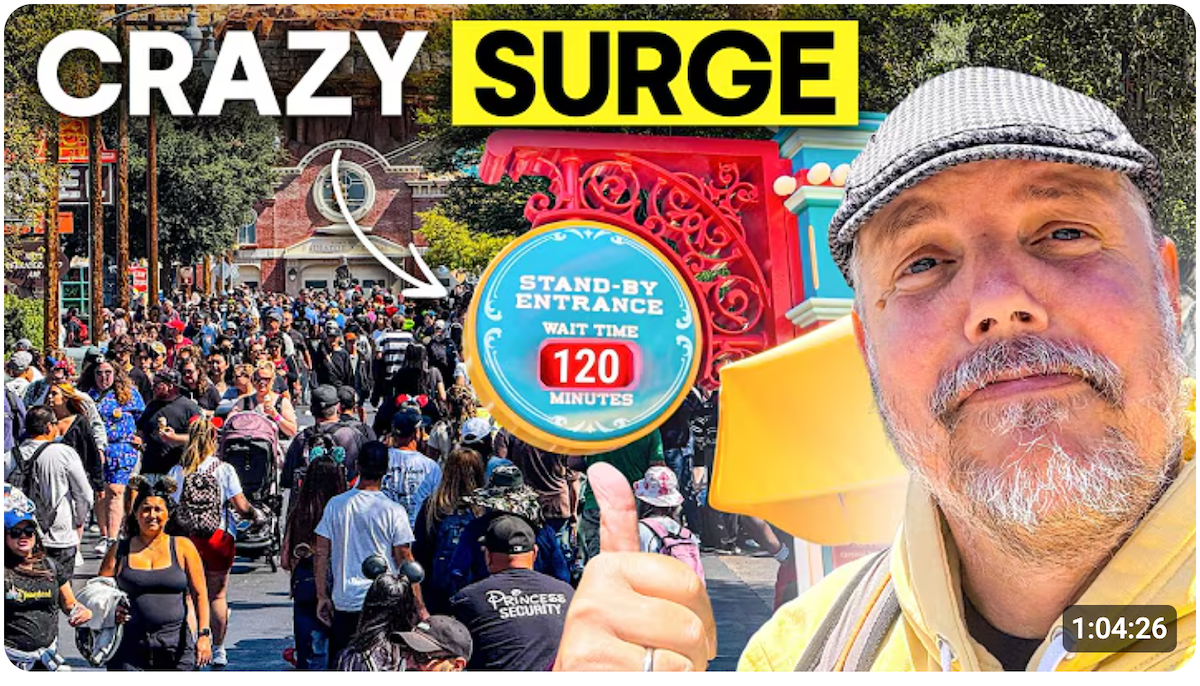
This ties into the debate surrounding privacy about being captured in the background when a creator is filming in the park. David shared with us his own rules regarding privacy concerns: “I’m very conscious of the crowds at all times, every minute of every shoot. So when I’m in a wide open space, like walking down Main Street or something like that, I’m not too concerned. That’s just standard.” He goes on to describe how this perspective changes with lower crowd levels, “But as the crowds get thinner, and if I’m in a place where there are fewer people, like, let’s say walking in or out of a queue, where there’s just a handful of people walking in or out, I’ll tend to lean the camera to the right or left away from that person.”
As for filming while walking down jam-packed walkways, David shares, “I’ll hold the camera super high. Like well above my eyeline, but above the crowd and everything, so people know if I’m in a crowded spot and I’ve got the camera on, I’m not filming you.”
This focus on privacy brings us to another rule Chris has, which is to avoid recording in more private settings, like pools and hot tubs. As he explains, “I just don’t want to show children in swimsuits, and I don’t want to show adults in swimsuits either. I feel it’s very private.” If he has to film a pool area he tries to do this before anyone is in the area for the day.
From respecting privacy to being mindful in walkways, ride queues, attractions, and pool areas, these Disney YouTubers have developed their own guidelines to help safeguard the overall guest experience while creating content.
How Disney YouTubers Avoid Filming Kids

One of the most common privacy concerns among guests is the discomfort around children being filmed by content creators while in the parks. Chris and David shared with us that this is something they both respect, and they try to avoid filming children.
Chris explains his stance on trying to avoid filming children in videos, “I try my best to not show children, and that is something that I think is very divided among YouTubers. Some of them are like, hey, we’re in a public place. This is Disney. I’m going to go ahead and videotape, and kids are here, and adults are here, and if they’re in my video, they’re just in the video, and I don’t need to worry about that because it’s a public setting.” While Chris acknowledges there is some validity to that perspective, he adds, “But I also believe that you don’t want to have everybody’s children in the videos.”
Avoiding filming children is a sentiment that David echoed in our conversation, noting that as a parent himself, he is especially mindful of it, “I just know I wouldn’t want that myself. So if I’m coming around a corner and I’m filming and I see a kid, boom, camera goes off. I’ll put the camera mode to selfie or something like that. The camera just goes off immediately because I don’t want there to be any sort of opportunity.”
Chris also has similar strategies for how he avoids capturing children when he is filming. He explained, “Like if I’m ever walking into a store, I aim the camera up a little bit higher towards the ceiling a little bit as I walk through doors, cause that’s when kids are running through. I don’t want to capture them.” Then, when he enters the store, he will pan down to the merchandise, so you’re just seeing the legs of people in the store and not their faces.
Chris and David both have little “secret” tricks they do to pan away from filming children, with David sharing that he’ll switch the video to selfie mode and position himself with his back to the wall or an open background as opposed to a ride queue. Chris will hold his hand up to the side of his face, which appears like he’s pointing to something, but instead it’s blocking the face of a child or other person in the park to give them additional privacy.
Privacy for kids seems to be at the forefront for many Disney creators, even those of us who are primarily bloggers. My son, featured in the image above with Dale teasing him for being on his phone, gives his permission for each photo that I share on the site, and he has full veto powers on anything he wouldn’t want to share. This kind of intentional approach highlights how content can be shared responsibly without compromising a child’s autonomy.
Content Creator Rules Create Privacy Middle Ground
When we think about the source of the biggest complaints against theme park filming, most of it actually aligns with live streamers rather than those filming content for YouTube videos.
Live streaming is a different genre altogether, which may include live streamers who are talking loudly or using flash while recording on attractions, recording without regard to the privacy of other guests, and, in extreme cases, heckling cast members or other guests to prompt a reaction. But of course, not all live streamers are like that. My son has had many positive interactions with Five Fires, which also live streams frequently at Disneyland. When he would speak to him in the parks, Five Fires would immediately position his camera away to avoid filming my son on the live stream, and his livestreams all appear to be quite respectful of the guest experience.
This was an important distinction we also made during our report on the recent “swatting” incident at Disneyland and how live streamers have generated more conversation around rules about theme park filming. Read more about recent concerns on live streamers and theme park rules in our article here.
It appears that content creation is here to stay, but the impact on guest experience can vary significantly depending on the style and approach, which often determines how noticeable or disruptive it feels to others in the park. The YouTubers we spoke to emphasized the importance of the guest experience, consistently noting that it should remain the top priority when creating content in the parks.
Don’t Miss the Latest Disney News
Don’t miss the latest Disneyland and Disney World news from Mickey Visit. Join the FREE Mickey Visit newsletter that over 100k readers receive every single week. Mickey Visit is here to help you save money and experience more during your Disney and Universal vacation. See the Mickey Visit guide to Disneyland and the Mickey Visit guide to Disney World for tips.