
Disney is actively working to bring new technology to the theme parks to revolutionize the way that their characters come to life. We sat down with the head of the Disney Research team responsible for the new innovations to learn more about what they are working on and plans for the future.
There have already been multiple projects from this team revealed to the world and now we are getting a deeper look into how the innovation is happening and what we can expect next from Disney. There is lots of ongoing work to improve guest experiences with technology. Mickey Visit brings you the latest Disney news and planning resources, including sweeping Disney ride maintenance changes and the latest park announcements.
READ MORE – These 10 Disney Rides Are Far Better Than The Ones They Replaced
Disney’s Plans to Bring Next-Generation Meet and Greets to Their Theme Parks
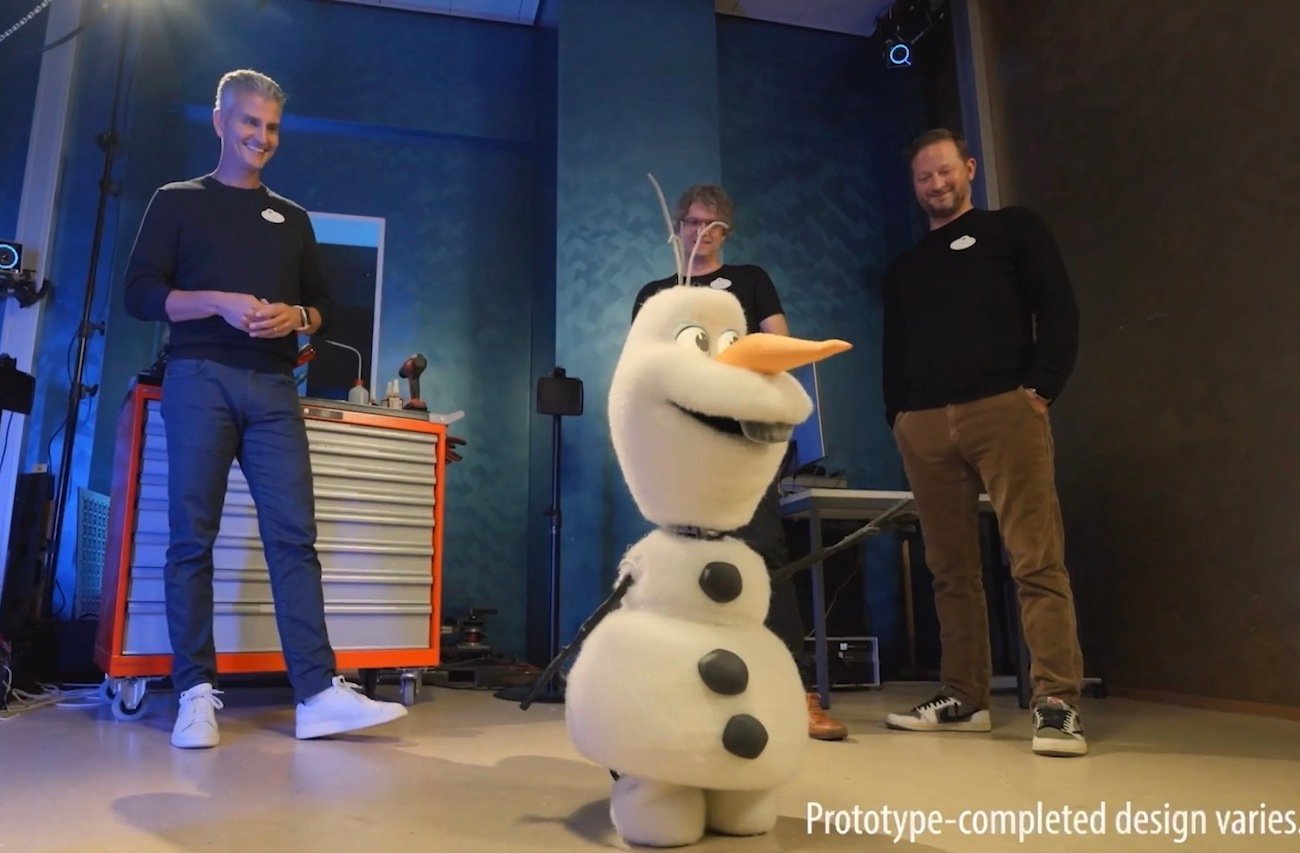
We interviewed Moritz Bächer, Director of Disney Research Lab Zurich, the technical team within Disney that is responsible for the unique character innovations. We discussed their goals to accelerate development timelines to get new characters into the parks within months of starting a project instead of years and focus on creating believable autonomy. The next decade of innovation from Disney in this area will focus on creating “believable autonomy” for characters, where they are so realistic that guests cannot distinguish characters from their movie counterparts.
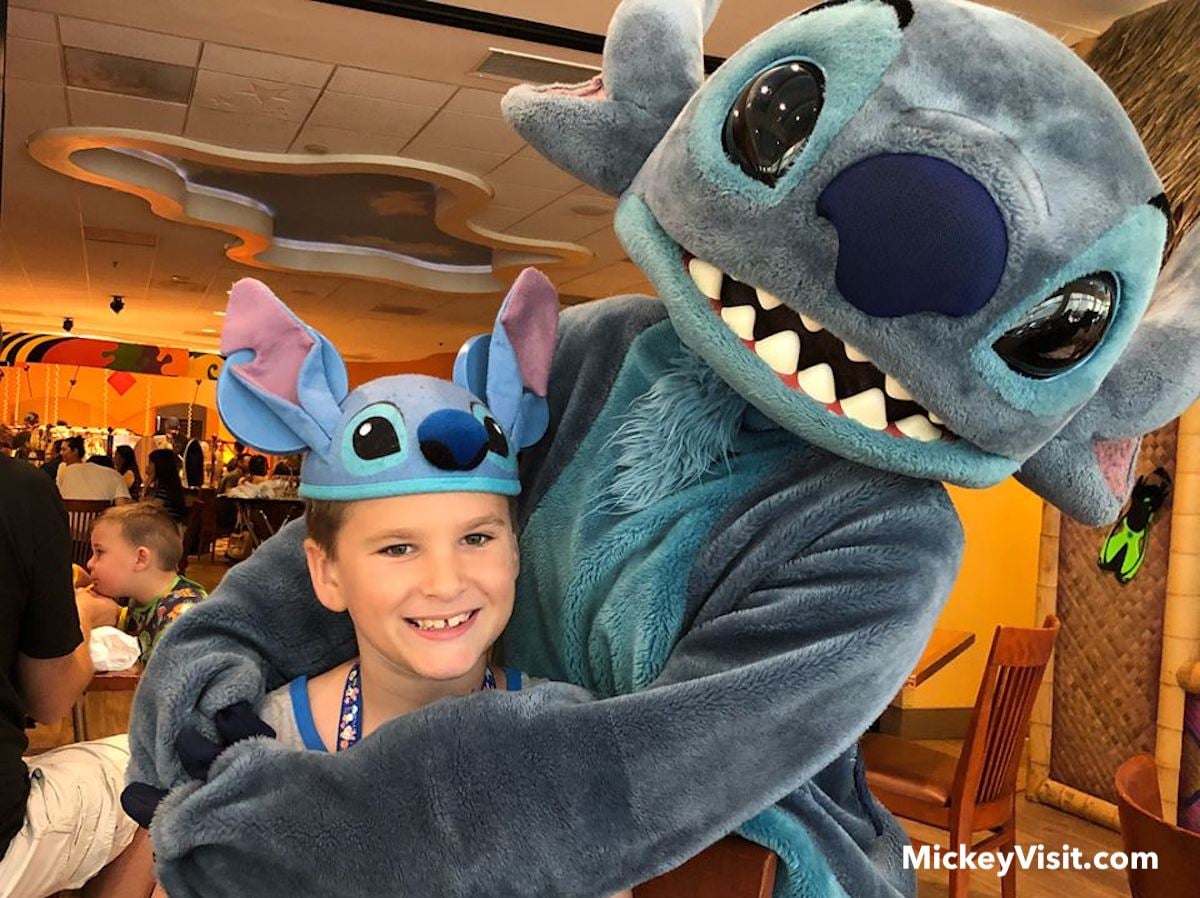
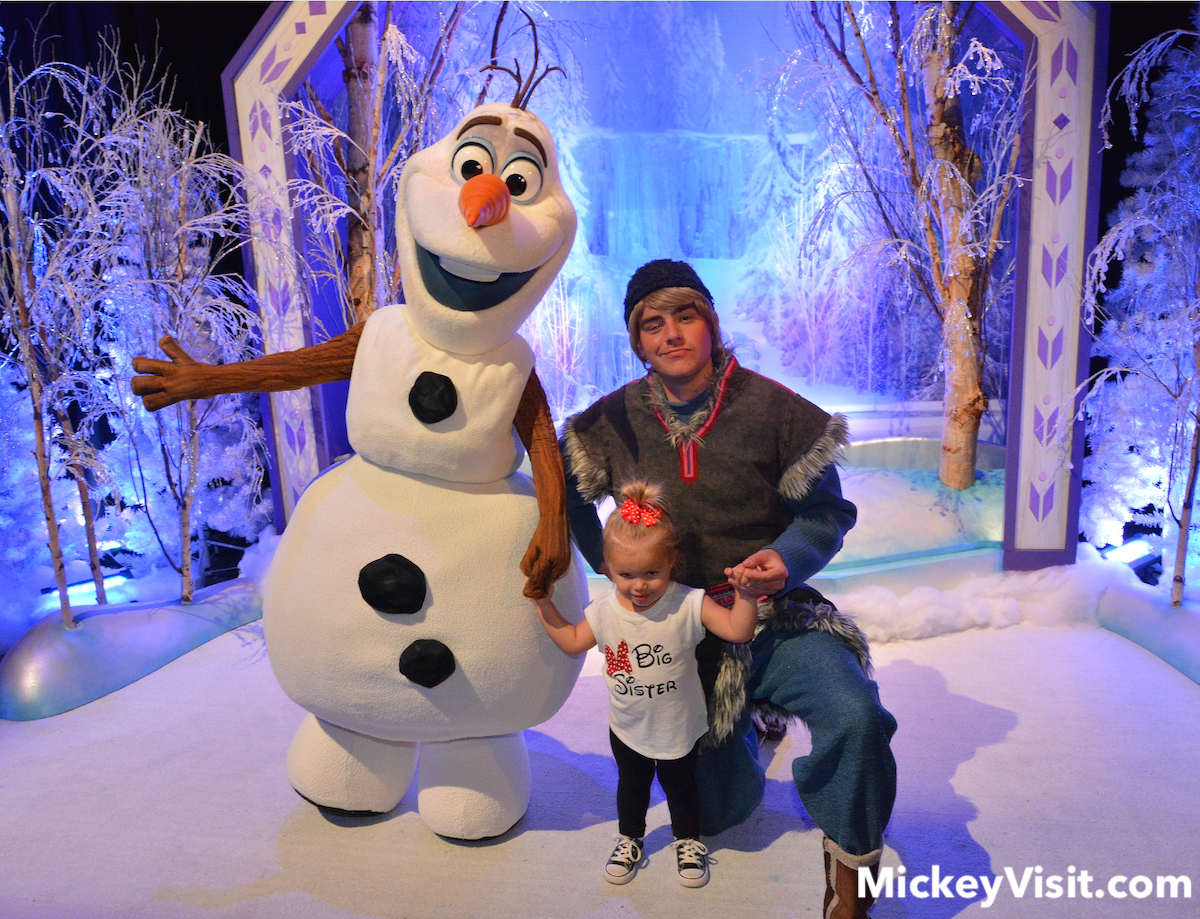
The new Olaf figure that is about to debut at World of Frozen in Disneyland Paris is a perfect example of this. The figure looks, moves, and talks exactly like the character in the movie (scroll down for full video). It truly looks like the figure walked right off the screen into the park. Compare the new Olaf figure to the current version of Olaf that appears in some shows and limited meet and greets in the parks (that photo also below). The current character is human-sized and doesn’t talk. Guests of all ages accept that it is Olaf today, but imagine the true reaction of a child seeing the new Olaf that is almost completely screen accurate. This is a massive leap in the experience of guests meeting this character. There are other characters that will benefit from this improvement as well. Imagine a Stitch meet and greet in this style.
Disney World Ride Closure ALERTS, Major Park Changes, Secrets Revealed
Get alerts on closures, park changes, exclusive discounts, and free printables. Trusted by 100,000+ Disney fans & planners.
He shared that any character they debut “has to be so real that you can’t tell the difference between the character in a movie setting and the one that you autonomously see functioning in a park setting.”
We also talked about the evolution of their publicly shared projects starting with the BDX Star Wars droids we have seen around the world at Disney Parks in the past few years.
He also shared that they are focused on delivering a future of interactive storytelling where guests can meet these autonomous characters in the parks and have a real interaction with the character. These interactions may go just beyond walking around. They have already begun to have these new robotic characters perform. He specifically mentioned that now one of these figures can complete a pirouette dance move.
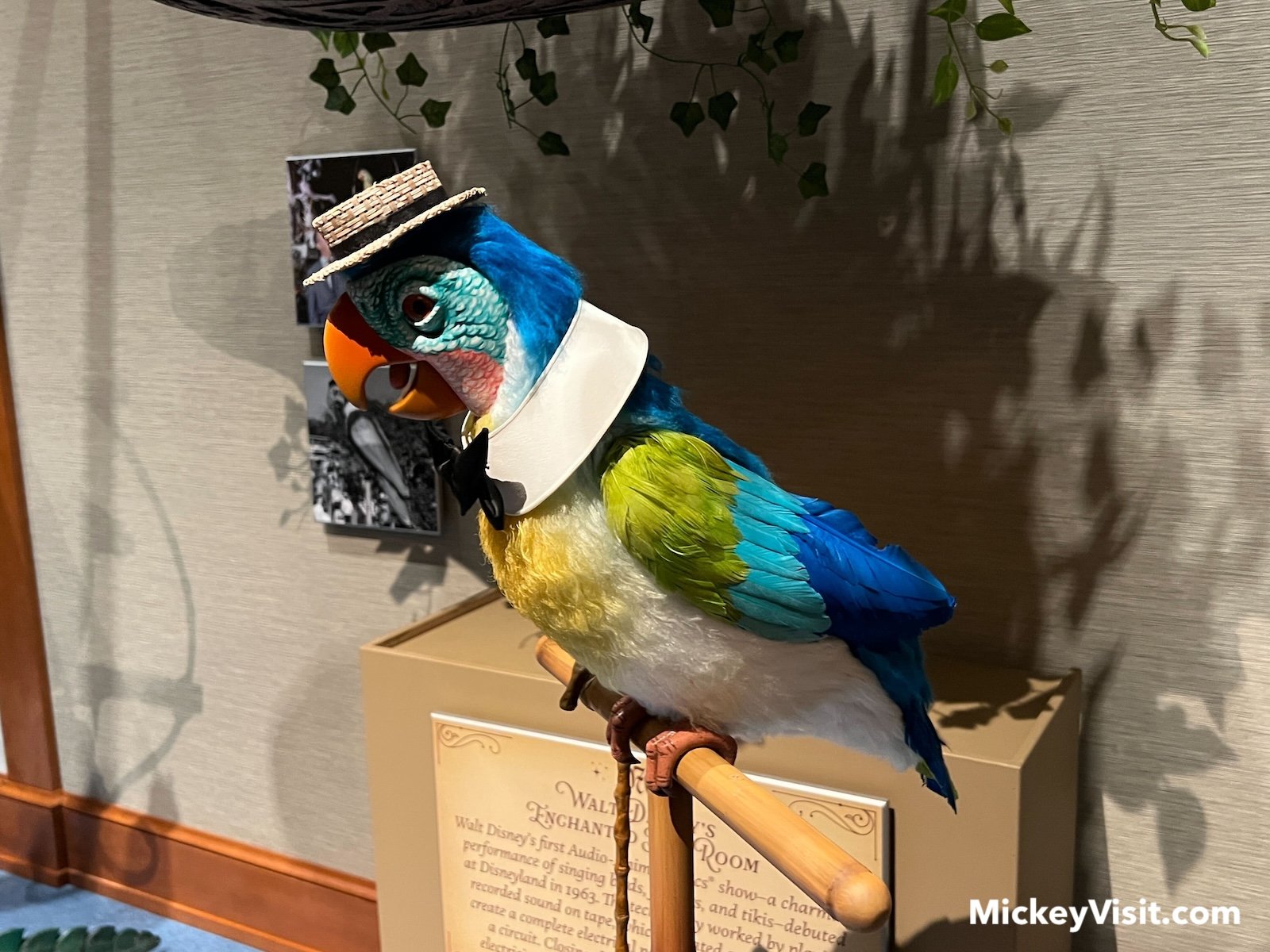
This is a real transition from the current use of robotics in the Disney Audio-Animatronics where figures largely go through a continuous loop of pre-programmed movements while fixed in one place.

To accomplish all of this, he shared that Disney has built a new open-source tool to simulate how these characters would behave in the real world without having to build them. We detail all of this in the interview below.
In addition to those projects, he spoke about how his team of eleven researchers has had a hand in the improvement and advancement in Audio-Animatronics technology used in new attractions around the world. Disney is constantly improving the way they tell stories and in the past year and a half have debuted Tiana’s Bayou Adventure with a set of impressive new figures, the new Walt Disney Audio-Animatronics figure at Disneyland, and new Frozen ride enhancements at EPCOT.
During our conversation, we focused on Olaf and plans for other free-roaming robotic characters at the Disney theme parks. Our conversation happened ahead of an appearance by Olaf at the NVIDIA GTC 2026 conference in San Jose, California. The robotic Olaf living character was crafted and brought to life by the minds at Walt Disney Imagineering R&D utilizing the NVIDIA Newton Physics Engine. Imagineers partnered with Walt Disney Animation Studios to ensure every gesture felt true to the character.
Moritz Bächer is presenting in a session titled Disney’s Robotic Characters: From the Screen to Reality via Physical AI on March 17 and will join partners from NVIDIA, Google DeepMind, and Skild for a panel discussion on Newton – the open-source, GPU-accelerated physics engine built on NVIDIA Warp and OpenUSD advancing robot learning and helping to bring Olaf to life – on Thursday, March 19.
READ MORE – 14 Spooky (and Somewhat Disturbing) Secrets of Disney’s Haunted Mansion You Don’t Know
Here’s our full conversation with Moritz Bächer about the evolution of Disney characters in the theme parks.
Mickey Visit: Do you want to talk just a little bit about what Disney Research is and how it fits into Imagineering generally and what you’re focused on?
Moritz: I lead Disney Research, I’m based in Zurich, Switzerland. We’re at the moment a team of 11, we’re actually growing by three, and we have shared PhD students with the local university, which is a fantastic talent pool and is the main reason for us having left there. We want to stay close to locations where there are a key in a way we’re seeing in the robotic space in this particular context.
Switzerland is sometimes called the Silicon Valley of robotics, and we also have a strong local university that has a fantastic robotics program. But it’s a team of 11, we collaborate with our friends in California, in Glendale, we also have folks that we work with in Florida, and so especially also animators and so on, we work with the studio partners together. Especially also on Olaf, we got to work with the amazing animators from the Walt Disney Animation Studios. But yeah, it’s a team that has mostly researchers and also engineers that are specialized in these areas that are highly relevant in the robotic space.
So we have mechatronics design that we do—so Olaf and also BDX, we are able to do that in the lab, assemble first prototypes—and then we have basically the rest of the team. There’s one team member focusing on that, the rest of the team focuses on the software to that, that ranges from simulation that truly simulates these characters because we want to iterate in simulation before we physically build something, over to reinforcement learning algorithms that allow us to have them learn to walk and a full artistic motion, and then also autonomous solutions for the future where we really have a push right now to make these characters more autonomous but still be at the human level. If a human would operate them, we want to get to that level of expressivity on the autonomous solution side.
Mickey Visit: And the BDX droids and Olaf are the two main projects we know about that you’ve worked on that you’ve talked about publicly, correct?
Moritz: Yes, exactly. We have additional character test characters we call them, so we have two humanoid characters. We got one of them to do a pirouette.
Mickey Visit: Is that a culmination of a decade’s work? You have been at Disney just over 10 years.
Moritz: Yes, we built up the expertise over the years. Robots were always fascinating to me, even in my childhood I drew actually robots and wanted to work on robotics. I’ve been working for the company for over a decade. I worked on mechanism design, I also worked on spinning tops by the way, and yo-yos. That was my first project when I joined. It was about mass properties and physics too, but it’s all basically connected.
And then I worked on mechanism design, we worked with our partners at Show Systems, they built amazing audio-animatronic figures, we build lots of technology and tools for them to do a better job in controlling them. We can, for example, take motion capture and directly translate that over to get an animatronic to move. But then that expertise in simulation and so on got us to the point where we could truly bring 3D roaming characters, robotic characters to life, like BDX droids and all that.
Mickey Visit: I’ve heard from your head of R&D at Walt Disney Imagineering that there is a general goal to get more of the technology you’re working on into the parks. Is Olaf part of that same push?
Moritz: Yeah, he and I actually share the goal of bringing characters to life and really truly bringing souls to the park. I’ve always made that my priority for the team, we always wanted to have an impact directly on the product that is guest facing. So we have the business in mind, we have the guest experiences in mind, we want to push the boundaries of technology to ever more expressive and believable characters. But so it’s always in the interest of better storytelling, always in the interest to enable artists to express themselves, but very much we want to bring technology to the parks quickly. And with reinforcement learning, simulation, and so on, we can build these characters within months and bring them truly to the parks within months.
Mickey Visit: Olaf is interacting with guests for the first time right now with some of the previews going on in Paris. Is there anything you’re immediately seeing of, oh, it’s interesting the way that people are interacting with it that surprises you?
Moritz: Oh, absolutely. I mean, seeing guests interacting with our characters—the first such moment for me was with the BDX droids in ’23. I got to be in the park for this one day when we brought them for the first time to the park, and I’ll never forget moments like that. And for Olaf, it was exactly the same. In November, we had a press event. Seeing the guest response is for me the most amazing moment. For example, with the BDX droids, you don’t know what the guest response is, but there were children, small children, running up to these robots and they were immersed. They just focused on the robot, they wanted to hug these robots, get really close, they were amazed. Seeing the guest response from younger generations to also elderly folks that all are excited, equally excited about these characters, that is amazing to me.
Mickey Visit: There’s a legacy of technology innovation at Disney that goes all the way back to Walt Disney. Is there anything that you look at from particular inventions that inspire you or that you think about as we want to make this be an equivalent jump to that?
Moritz: I mean, actually Walt himself is quite inspiring to me. There’s a new documentary about him building Disneyland and I highly recommend it if you haven’t watched it yet. He was a true inspiration to me like, he just followed his path, he had a vision, he had an idea, he knew that it’s going to work out. But it was a really challenging path at times and he just followed through. And so he did that with audio-animatronics as well, he coined the name himself. That was something completely new and he brought a first character within a flexible skin to life in 1964. So I think Walt’s legacy is what we try to continue with these robotic characters and with these new technologies like simulation, reinforcement learning. We can do lots of things in simulation and directly translate that to the real world afterwards. That basically is a continuation of that legacy that Walt himself created. This has been such an inspiration for me. This is a big part of my motivation to join Disney.
Mickey Visit: What do you think a new thing that you would debut today, how would that look different than something new you would launch in 10 years? What are the advancements you’re thinking about? Disney is set to invest $60 billion in the theme parks. This will I am sure fit into that in some ways.
Moritz: I mean, so our first goal is certainly to just populate our parks with robotic characters that are autonomous and entertain our guests in new unique ways. And what’s special about them is that you can co-direct the story as a guest, so you have an influence on that story. It’s not like an attraction where it’s a linear story being told because you’re sitting in a ride vehicle. And so we will continue that journey. Right now we build characters that are freely walking, we are working on solutions where you can truly get characters to perform.
So we got a test character to do a pirouette, for example, that to me is a performance. So it’s no longer walking, it’s truly even doing motions that are challenging, really challenging for humans to do. And if you think about Marvel characters and so on, pushing the boundaries, getting to the superhero level even beyond what a human can do, that’s certainly on the roadmap and something that I’m truly excited about. Something else that I feel like we’ll see is more autonomous solutions. We really get to the point where we can make characters autonomous, and I call this ‘believable autonomy.’ So at the Walt Disney Company, it’s not just about autonomy, it has to be believable, right? It has to be so real that you can’t tell the difference between the character in a movie setting and the one that you autonomously see functioning in a park setting.
Mickey Visit: Over the past 20 years when new characters have been brought into the parks, they haven’t always been continuously sustained in the parks. Is that something you would now think about of how do we bring maintenance and operations and all these pieces into it to make sure that we can have Olaf running for a long time successfully or be part of Frozen Land for a long time?
Moritz: I mean, when we develop something on the research side, we have basically all these factors in mind. So you know, safety—that’s an important aspect. Maintenance is an important aspect. So we keep those things in mind and build better technology because we do so. But it’s also reinforcement learning and simulation and all that progress helps us to achieve these goals much quicker nowadays than we were able to do previously. But then we also have an amazing overall team. Hardware productization is worked on, software productization is much smoother than ever before. So it’s really working together that makes this possible. But yes, we bring these characters truly to the parks now within months and go from research prototypes to something that you can deploy within months.
Mickey Visit: Is that a shift in how they would have been developed in the past? There is more of an expectation that you want this stuff to live in the parks and be sustained operationally in the parks.
Moritz: I mean, for me, it was always a priority to have an impact on something that is guest facing. And so we have a team that has this very much in their heads, right? So that’s key—that you don’t just build a prototype and use whatever hardware that you can to achieve that goal, you have the deployment in mind from the first day. That’s crucial. But again, it’s like an overall team, right? Everyone is best-in-class from early research that I lead to basically deployment, to productization aspects. So we have basically a world-class team at this moment in time that makes this possible.
Mickey Visit: Is there anything else you want to share about tomorrow, what you’re presenting, or any last point you want to make sure that you get across?
Moritz: Yeah, thanks for that question. So we do have a really exciting simulator to share. So we call this the Camino Simulator. Disney Research created that, it’s basically our contribution to the open-source Newton framework.
And so for Olaf, Olaf is quite a complex robot because it has linkages and so on, spherical linkages for the two arms. That’s something that previous simulators were not able to support, especially on the GPU. For reinforcement learning, you need to run many simulations at the same time, so we created such a simulator. It’s open-source, available open-source, and it unlocks basically mechanical engineers to really express themselves. So no more constraints, you don’t have to think about simulation and controls. You really just build your mechanical system and can then apply reinforcement learning to those characters. And so this is a huge deal, and so that’s an innovation that’s only possible due to our expertise that comes from a decade working on simulators for animatronics where we don’t leave a stone unturned to basically be as expressive and believable as possible.
Thank you to Moritz for making the time to share more about his ongoing work at Walt Disney Imagineering. Mickey Visit brings you the latest Disney news and planning resources. Make sure to follow along for the latest on theme park changes and advancements.
See a full video of Olaf below.
Don’t Miss the Latest Disney News
Don’t miss the latest Disneyland and Disney World news from Mickey Visit. Join the FREE Mickey Visit newsletter that over 100k readers receive every single week. Mickey Visit is here to help you save money and experience more during your Disney and Universal vacation. See the Mickey Visit guide to Disneyland and the Mickey Visit guide to Disney World for tips.