

Demand for video content at the Disney Parks skyrocketed in 2020, as many Disney fans used it to connect with the parks amid lockdown restrictions. The increase in live streaming was also boosted by the introduction of live features on TikTok in 2022, with both techniques contributing to more active filming taking place at Disneyland and Disney World.
This increase in video content has come with its own controversy as a debate emerges around what is considered proper content creation etiquette, with Disney seemingly split on how to handle their response. The rules for video recording vary drastically across the Disney Parks, with one park banning it outright. Let’s explore the recent controversies surrounding video content and live streaming, including the most recent Disneyland “swatting” incident, plus insights from a respected content creator on proper etiquette. Mickey Visit brings you the latest Disney news and planning resources, including the reopening date for this popular Magic Kingdom roller coaster and all the new Star Wars popcorn buckets coming to Disneyland. Disneyland is making big land change this month.
READ MORE – Here’s a Secret Way to Skip the Line For This Hidden Gem Attraction at Disney California Adventure
Recent Disneyland “Swatting” Incident Draws Controversy
On March 11, 2026, the Anaheim Police Department received a call reporting a mass shooting and bomb threats at Disneyland. When officers arrived, it was clear the call was a swatting hoax, meaning it falsely alleged a violent emergency to prompt a heavy police response. The incident was part of several other hoax calls in Southern California that took place that evening, which resulted in significant law enforcement responses.
Disney World Ride Closure ALERTS, Major Park Changes, Secrets Revealed
Get alerts on closures, park changes, exclusive discounts, and free printables. Trusted by 100,000+ Disney fans & planners.
So what did this swatting hoax at Disneyland have to do with live streamers? The incident appeared to be linked to a popular live streamer that was actively streaming in the park at the time. This TikTok live streamer, known as Oblivion, was seen speaking to police and being escorted out of the park. According to news reports, police are investigating whether the swatting was meant to target the streamer or if a third party saw the livestream and made the false call.
Firsthand accounts regarding this streamer, mainly from sources like Reddit, allege that he was removed from the park for failing to comply with the investigation. Users on Reddit also reported that he is known for conducting live streams unprofessionally, including filming in bathrooms and using vulgar language in parks. Take this commentary with a grain of salt, but it ties into the general debate that comes and goes frequently within the Disney community about the increased presence of Disney live streamers.
What Is Considered “Proper” Video Etiquette

First, let’s start with an important distinction. While some media outlets use live streaming to refer to all video content creation, there’s actually a big difference in approach and impact when it comes to filming. You have creators who are actively live streaming in the parks, which requires constant dialogue and a louder speaking voice to be heard on the live stream. Some of these live streams also require the use of multiple devices, one to do the video recording and one to type back to viewers in the chat feature. For creators who are primarily in the park and video recording, many decide to add voiceovers to their videos later, which means much of their filming in the park can be done quietly.
Most of the pushback from guests who are frustrated with live streaming and video recording seems to stem from a growing lack of etiquette, especially as the number of TikTok live streamers continues to increase. The debate around live streaming and video recording at Disney continues to go back and forth, with this topic coming up quite frequently in online Disney communities. Some guests see all of it as invasive and disruptive of other visitors’ experiences, while others argue it makes the parks available virtually to those who cannot travel there frequently. And of course, there’s some gray area when we look at the different approaches of live streaming vs. video recording.
Some of the biggest complaints against video content creation align most often with live streamers who are talking loudly or using flash while recording on attractions, recording without regard to the privacy of other guests, and, in extreme cases, heckling cast members or other guests to prompt a reaction. We’ve seen an increase in this across TikTok in particular, with some live streamers actively “running out the clock” by trying to be the last one to leave the park for the day so they can film being escorted out by security.
We spoke with Chris Provost, the YouTube creator behind Provost Park Pass, about what he considers to be proper video creation etiquette, and he shared his insights with us. He explained that when he films videos in the parks, he makes a deliberate effort to be respectful of other guests. This could include recording in situations when he’s more isolated, such as having his own ride vehicle on attractions like Haunted Mansion or Pirates of the Caribbean. He also spoke about avoiding talking while filming since he can always add narration later through a voiceover.
We asked Chris about his opinion on the increase of live streaming in the park, and he shared that he sees live streaming as more of a challenge in regard to park etiquette. Since live streamers need to engage with their audience in real time, they have to keep talking continuously and often at a louder volume so their microphone can pick it up clearly. While some live streamers still manage to be respectful, others prioritize attention and quick engagement by acting more loudly or dramatically, which can frustrate people around them.
This aligns with some of the concerns we’ve read from Disney fans online who primarily value preserving their experiences in the theme parks and have shared horror stories about witnessing outrageous behavior from live streamers.
What About Ensuring Privacy While Filming?
There is also the debate about privacy about being captured in the background when a creator is filming in the park, whether that is standard video recording or live streaming.
Chris follows a personal set of etiquette guidelines when filming in the parks, especially when it comes to filming children. He goes on to say, “I try my best to not show children, and that is something that I think is very divided among YouTubers. Some of them are like, hey, we’re in a public place. This is Disney. I’m going to go ahead and videotape, and kids are here, and adults are here, and if they’re in my video, they’re just in the video, and I don’t need to worry about that because it’s a public setting.” He doesn’t approach it that way.
While Chris acknowledges there is some validity to that perspective, he adds, “But I also believe that, you don’t want to have everybody’s children in the videos.” Chris also shared some of his filming etiquette strategies for avoiding capturing children. He explained, “Like if I’m ever walking into a store, I aim the camera up a little bit higher towards the ceiling a little bit as I walk through doors, cause that’s when kids are running through. I don’t want to capture them.” Then, when he enters the store, he will pan down to the merchandise, so you’re just seeing the legs of people in the store and not their faces. This is similar to another “secret” of his that he shared with us that when he’s speaking on a video, he’ll hold his hand up to the side of his face that appears like he’s point to something but instead it’s blocking the face of a child or other person in the park to give them additional privacy.
This made me think of when my teenage son first started meeting his favorite Disney YouTubers in the parks. He’s been watching them for years, and many of their voices have basically been background noise in our home for a long time. The first time he met Five Fires, he was about ten years old, and Five Fires was in the middle of a live stream. When my son waved, he stopped to chat and say hello, but he intentionally pointed his camera down so he could talk without showing my son’s face on the live stream. Moments like that really highlight how much intentional etiquette exists within the YouTube community.
Another one of Chris’s key rules is avoiding recording in more private settings, like pools and hot tubs. As he explains, “I just don’t want to show children in swimsuits, and I don’t want to show adults in swimsuits either. I feel it’s very private.” This is such a good point and something I’ve thought of myself when we take pictures of hotels for reviews for Mickey Visit. I always wait until the pool is empty by going early in the morning to avoid capturing images of guests.
International Disney Parks Have Stricter Rules
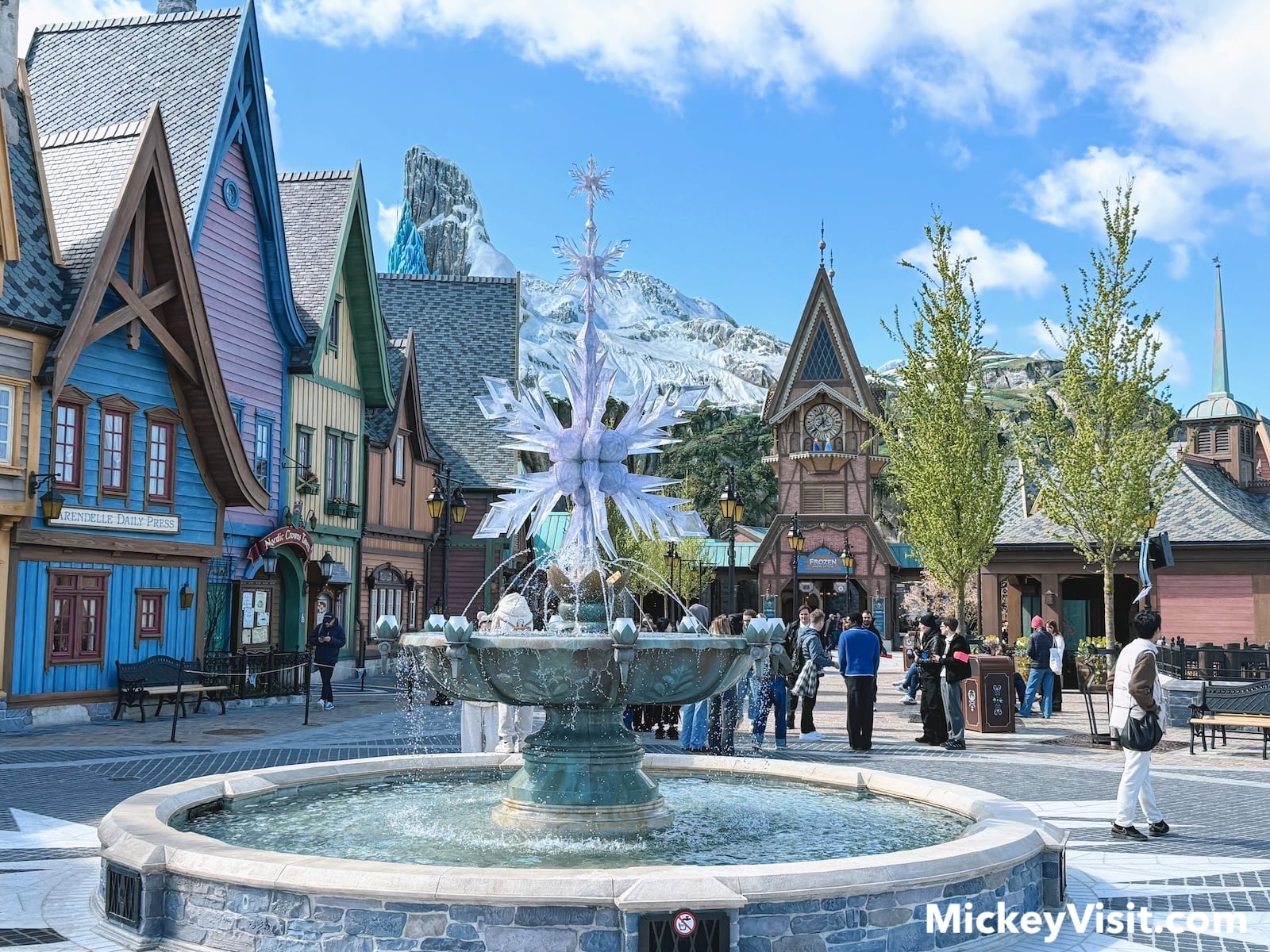
Disneyland and Walt Disney World both have similar policies in place regarding video recording. The most relevant policy language that applies to both parks includes not obstructing walkways or operations and the ability to remove guests for disruptive or unsafe behavior at its discretion. Commercial filming or recording without approval is not allowed, nor is the use of selfie sticks, while large tripods are typically prohibited.
When we look at the policies in place at Hong Kong Disneyland and Shanghai Disney Resort, video recording is allowed but in a limited, non-disruptive form that is very closely monitored. Cast members have far more agency to intervene with guests whom they see as being disruptive to the park experience.
Disneyland Paris just updated their park policy in March 2026 to address the increase in video recording by tightening restrictions on filming and recording equipment. While video recording is not banned outright at Disneyland Paris, this most recent update significantly restricts the ability to do it. The updated policy also reminds guests that only filming for personal use is allowed unless a guest has prior authorization from Disney. On a recent trip to Disneyland Paris, we were impressed with some of their policies around security, especially with how efficient their security and bag checks are.
Out of all the Disney Parks, Tokyo Disney has the strictest policy regarding video recording since it essentially banned the practice in 2022. The official policy language for Tokyo Disney states, “Commercial photographing, any photographing that may inconvenience other Guests, or public transmission is not permitted.” In Japan, the phrase “public transmission” can include live streaming and uploading content to social media sites. This policy essentially bans all live streaming and recording for content creators.
However, the enforcement of this is a bit varied according to Chris from Provost Park Pass who shared with us that he was encouraged to film Tokyo Disney’s famous Beauty & the Beast attraction with cast members stating, “you should show this to Americans!” But yet, there is a strict rule on not filming on the equally popular Winnie the Pooh ride with that being strictly off limits. There is signage posted around Tokyo Disney sharing with guests which attractions allow filming and which do not.
Should Domestic Disney Parks Ban Live Streaming?
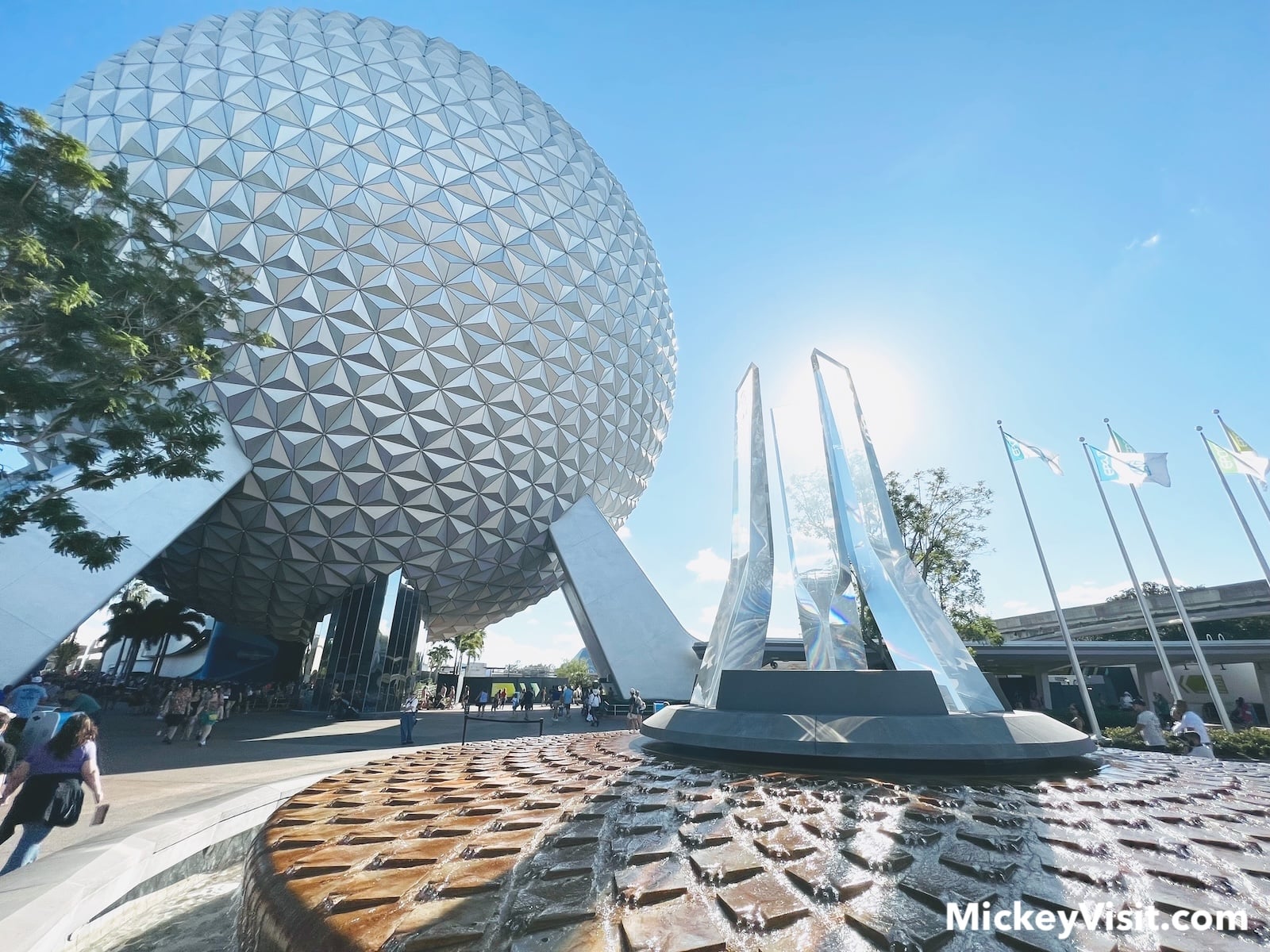
Some guests would love to see Disneyland and Disney World take the same strict route as Tokyo Disneyland and ban video recording in the parks or on certain rides. But at the same time, there’s a large fanbase of these popular YouTube channels and social media accounts. There is a clear demand for the content, otherwise it wouldn’t be so successful. People enjoy watching these live streams and curated YouTube videos. If we look at some of the most popular Disney YouTube channels, many average anywhere from 215-350K subscribers, including Provost Park Pass, Five Fires, Mammoth Club, and Paging Mr. Morrow.
At the end of the day, all this continuous flow of content acts as free marketing for Disney. This keeps Disneyland and Disney World active in fans’ social feeds and drives interest in visiting and returning, especially since many creators also share discounts, new rides, and upcoming events. This is an endless free advertisement for Disney. And with Disney intentionally collaborating with so many diverse creators, they are targeting multiple audiences by allowing this content creation to take place.
The real issue most guests tend to have is with the less professional video recording in the parks. These are the creators who are causing disruptions and creating an uncomfortable environment for guests and cast members. Perhaps the answer here is not an outright ban, since that would unfairly impact content creators who are respectful toward other guests. A better approach may be tightening enforcement around disruptive filming, especially when it comes to live streaming, and giving cast members more direct authority to intervene when they see it.
Do you think Disney should ban all forms of video recording from Disneyland and Disney World? Or do you think it’s just live streaming that should have more regulations? What do you think about Chris’s comments about avoiding filming children and the idea of privacy? Should all content creators avoid capturing children in their images and videos? Or do guests give up that right to privacy by existing in public spaces?
Don’t Miss the Latest Disney News
Don’t miss the latest Disneyland and Disney World news from Mickey Visit. Join the FREE Mickey Visit newsletter that over 100k readers receive every single week. Mickey Visit is here to help you save money and experience more during your Disney and Universal vacation. See the Mickey Visit guide to Disneyland and the Mickey Visit guide to Disney World for tips.

My own rules (I’m around Walt Disney World):
– I simply don’t do livestreams. To me they simply don’t tell any real story and they draw attention to oneself in all the wrong ways.
– Don’t be conspicuous. I don’t need to advertise myself in the parks. I carry a small number of cards for the times that someone might ask, but otherwise you have no idea what I do until you see it online.
– I’m an Annual Passholder; I can always come back another time. That guest I just blocked may have lost their once-in-a-lifetime chance to catch a memory. Stay out of the way and find places and ways to record that respect those around you.
– I don’t record other people and ESPECIALLY DON’T RECORD CHILDREN. Just too many perverts in YouTube land and I already look enough like one that I don’t need to reinforce the stereotype, ya know?
– Follow Cast Member directions and put it away if you’re told to. At the same time, get to know some of the regular CMs and their supervisors—they can often suggest a place where you can set up without being a distraction to other guests and still get a good recording. You’ll get a lot more respect over time simply asking “is it okay to set up here?” I’ve tried to learn those places over time as well where can set up a monopod on a trash can behind the crowd or against a column or pole where it simply blends into an already existing obstacle and doesn’t become a distraction.
– Rides on board: Meta glasses FTW. I have a pair of Oakley Meta HSTNs with my prescription so I don’t need to swap. Only limitation is the three-minute limit per recording.
– As for show/parade set ups, monopods (or monopod-style with smaller tripods at the bottom for stability) > tripods every time. As do 360° cameras like an Insta360—I can just hit record and let it run, and reframe down to the angles I want later.
Thank you for the thoughts on these and I appreciate you sharing your own rules
Content creators are creating their own speech rules and it’s not just at Disney. Other parks, entertainment sites, movie theaters, and venues retail are subject to the inconsideration of these individuals. If you monetize in any way these streams or videotaping and you have individuals in the picture that did not give express permission to be in your production, you can be sued without written release. Theme parks, museums, retail locations, theaters, any place that is private property is not public areas. And even in public areas the general populace has protections.
The whole thing is rather distasteful and I wish they’d follow stricter rules in this country. Too many times people’s simple enjoyment of somewhere is disturbed and negatively impacted by these intrusive activities.
We often think of Disney parks as ‘public spaces’. In fact, outside Disneyland, there are signs stating that Disneyland is private property. Additionally, there are signs stating that you may be filmed, but I think this mostly applies to in-house productions or at least that is what I thought.
I have a professional media background and two rules we had were get consent from people you feature on camera and no children without written parental consent. Disney should ban live streaming outright. You would think it should be fairly easy to enforce since you can see where they are in the parks based on their feed.
I think vlogging is fine (record and edit later) and in fact I have enjoyed videos from Provost Park Pass and Adam the Woo (RIP) over the years. The funny thing is that I don’t record on the rides for myself anymore and just enjoy it because i know if I want to relive an attraction, there is probably a video of it on YouTube somewhere.
Pretty much agree with everything you said here and we try to follow those same rules.