


Disney shareholders are set to vote on a proposal related to changes to the Disability Access Service (DAS) at Disneyland and Walt Disney World during the upcoming Walt Disney Company annual shareholder meeting. The vote follows the introduction of a proposal requesting that the company review the recent DAS changes, and Disney has already issued a recommendation to shareholders on how the board believes the proposal should be addressed after initially reversing the effort to block the proposal.
Here’s everything you need to know about the changes being proposed to DAS, the history of this shareholder proposal, and Disney’s recommendation to shareholders. At Mickey Visit, we report on Disney news like the newest Disney gift card discounts and Inside Disney’s New Monsters, Inc. Restaurant That Opens This Week. We now have the results of the DAS proposal and new CEO comments.
READ MORE – 11 Unwritten Rules of the Disney Parks You Really Need to Follow
DAS Disability Shareholder Proposal Vote Happening Soon
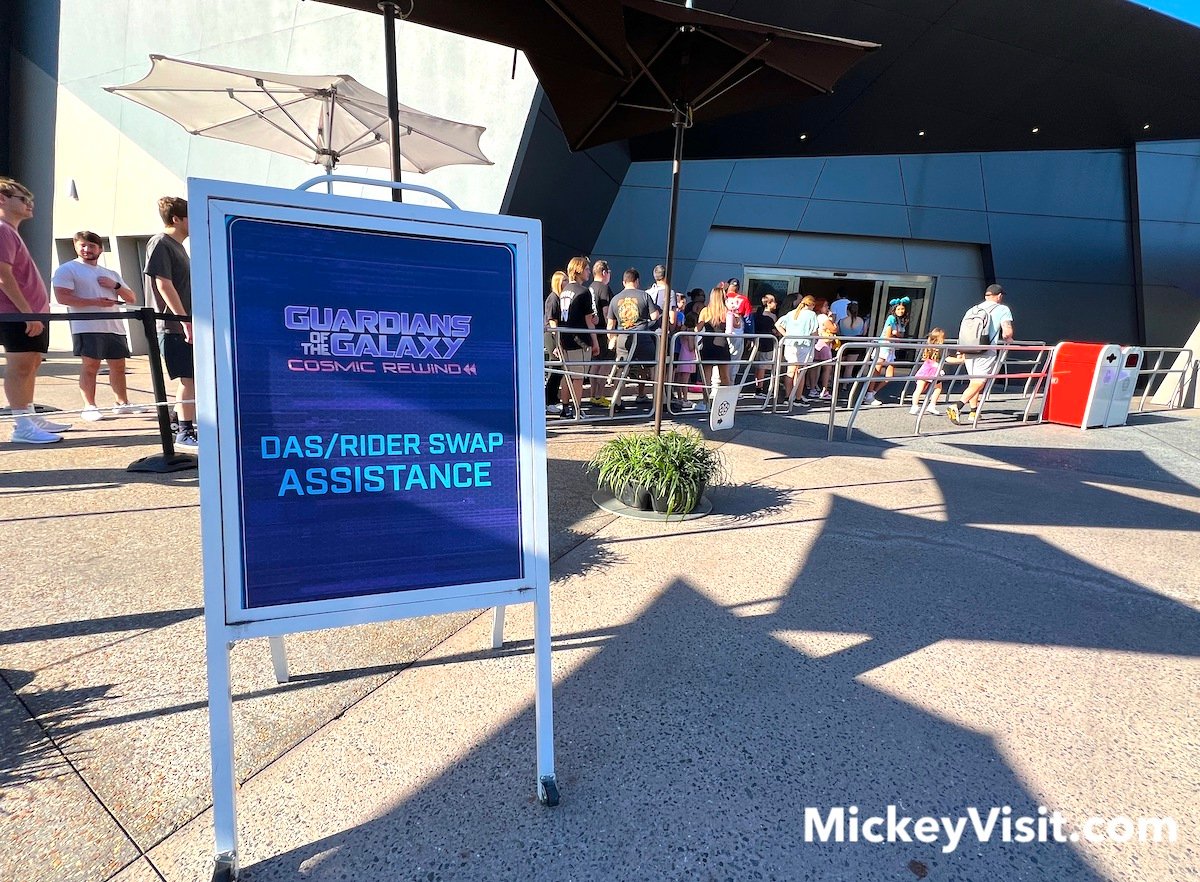
DAS was significantly restructured in 2024 in an effort to curb overuse, misuse, and other issues that were beginning to weaken the program’s effectiveness. As a result, many guests who were previously eligible for these accommodations became ineligible after the changes. One of the most widely discussed early-2025 changes was the removal of the word “only” from the phrasing that DAS is available to guests with “developmental disabilities or similar.” As we noted in our original coverage, this wording adjustment did not actually broaden eligibility for the program, even though some guests initially hoped it might.
This most recent move from disability advocates introduced the now viral shareholder proposal that “urges The Walt Disney Company to assess the legal, financial, and reputational risks associated with its controversial Disability Access Service (DAS) overhaul.” Part of the language in this shareholder proposal attributed the recent dip in Disney Parks attendance, previously noted by executives on a February 2025 quarterly shareholder call, to the more restrictive DAS eligibility criteria.
The proposal is listed on the meeting’s official agenda under the name “Independent Review and Report on Accessibility and Disability Inclusion Practices.” This proposal requests that The Walt Disney Company evaluate “the legal, financial, and reputational risks tied to its controversial Disability Access Service (DAS) changes.” The shareholder proposal asks Disney to commission an independent third-party review of its accessibility and disability inclusion practices, evaluating risks, comparing them against standards and competitors, and sharing the findings publicly and internally.
Disney World Ride Closure ALERTS, Major Park Changes, Secrets Revealed
Get alerts on closures, park changes, exclusive discounts, and free printables. Trusted by 100,000+ Disney fans & planners.
The annual shareholder meeting for The Walt Disney Company is scheduled for March 18, 2026, at 1 PM ET, which includes a vote for board members and an advisory vote related to executive compensation and other proposals. This meeting will also hold a vote on the DAS shareholder proposal that has made headlines over the past few months. Disability advocates have been waiting anxiously for the outcome of this vote, and now that we’re getting closer to the shareholder vote, it’s a good time to recap how we got here.
What is the DAS Shareholder Proposal?
So what is a shareholder proposal? A shareholder proposal is a recommendation that can be submitted by any investor of a public company that asks the company to take a specific action. Usually, these proposals are submitted to be included in the materials for a shareholder meeting and are motivated by governance, social, or environmental concerns.
So essentially this proposal, which is supported by the DAS Defenders advocacy group, seeks “an independent, board-supervised assessment of legal, financial, reputational, operational, and competitive risks created by the DAS overhaul, with findings reported to shareholders.”
The advocacy group DAS Defenders has been pushing back against Disney’s changes to the disability access program since they were first introduced. According to its mission statement, the group is “a grassroots organization dedicated to promoting accessibility for individuals with disabilities, established in reaction to exclusionary changes to Disney’s Disability Access Service (DAS).”
DAS Defenders has become a prominent voice in the advocacy effort and regularly pitches reporters in an effort to keep the issue in the national spotlight. In 2025 alone, we received nearly 20 story pitches from the organization via email. The program’s changes, which took effect in June 2024, were covered in depth by the Associated Press in December 2025, coverage that was partly driven by this shareholder proposal.
Disney Recommends Board to Vote Against Shareholder Proposal
The Walt Disney Company’s original response, published on the SEC’s website, requested permission to exclude the proposal because it was “materially false and misleading,” related to the company’s ordinary business operations, and had already been substantially implemented. But later, the Walt Disney Company withdrew its request to exclude the shareholder proposal from its 2026 proxy statement and moved forward to include the proposal on the next meeting’s agenda.
This development was followed by Disney formally recommending that shareholders vote against the proposal. This recommendation was revealed in the proxy materials for the upcoming meeting with Disney, disclosing that it decided to include the proposal due to recent regulatory changes, despite the assertion that it does not meet Rule 14a-8 requirements. Rule 14a-8 is a rule from the Securities and Exchange Commission that explains who can submit a shareholder proposal, how and when it must be submitted, and what types of topics can be included in a company’s proxy materials.
Disney argued in its response that the company already has strong accessibility and disability inclusion practices in place and that the company has been an industry leader in this area for more than 30 years, during which it has regularly reviewed and updated its approach. Disney referenced the public information available online and in its parks, along with a wide range of accommodations across its theme parks, media, and streaming platforms, including the Disability Access Service, captioning, audio descriptions, and other accessibility tools. Disney also emphasizes that it has robust leadership, governance, and risk oversight structures dedicated to inclusion and guest safety, which it says make an additional independent review unnecessary.
So, because of those reasons, the Board argues the proposal would not add meaningful value for shareholders and would require resources without providing new or useful information, leading it to unanimously recommend a vote against the proposal. The Walt Disney Company also repeated its prior statements that the shareholder proposal is false and misleading.
While this proposal is unlikely to pass, since shareholder proposals rarely succeed when a board recommends voting against them, the effort still represents a win for DAS advocacy groups. The ongoing back and forth has brought renewed attention to DAS and kept the conversation active, even though the changes were first introduced in 2024.
You can read the official wording from the proxy materials below from Disney’s recommendation to vote against the proposal:
The Board recommends that you vote against this proposal for the following key reasons, as discussed in more detail below:
- The Company is committed to the design and implementation of innovative and effective services that accommodate persons with disabilities and already reviews its practices on an ongoing basis. The Company has been the industry leader in accessibility for over 30 years.
- The Company provides detailed public information, tips and recommendations regarding its accessibility and disability inclusion practices, both online and in person in its theme parks.
- The Company provides strong governance and oversight of its inclusion practices, as well as risk management.
- The proposal’s request would not enhance shareholder value.
Across the Company, we endeavor to provide opportunities to enjoy our products and services. To that end, the Company has made thoughtful investments to incorporate accessibility for people with disabilities throughout our operations as we strive to design, promote and serve as a model for accessibility. The Company has given the same attention to detail in its development of the Disability Access Service program for its domestic parks, which provides an extraordinary benefit – never having to wait in the regular standby lines for most rides for those who require that option. The Company also offers a broad range of different accommodations to assist in accessing the rides and other attractions in the parks, accessing our content and programming and experiencing our other products and services. For example, the Company offers a range of tools and accessibility features across our streaming platforms and networks, including tools such as audio descriptions, closed captioning, keyboard navigation and interoperability with popular screen readers.
The Company provides detailed information regarding accessibility and disability inclusion practices on its websites, including the publication of an Accessibility Topic Brief. Each of our theme parks also publicly provides thorough information about its accommodations and assists guests both before and during their visits. For our domestic theme parks, Disneyland Resort and Walt Disney World Resort, this includes pages on the Disability Access Service program with guidance on registration and the process for using the program once in one of the parks.
The Company has strong governance and oversight of both its accessibility efforts and risk management. Our Senior Executive Vice President and Chief People Officer leads Disney’s global people and culture strategy: talent acquisition and development compensation and benefits; opportunity and inclusion; organizational effectiveness; and employee services and systems.
Reporting to our Chief People Officer, our Senior Vice President and Chief Opportunity & Inclusion Officer leads the Company’s Opportunity Inclusion strategy and partners closely with leaders and teams across all segments to foster a culture rooted in belonging. The Chief Safety Officer leads the Company’s guest safety efforts for Disney Experiences, including those related to guest accessibility, in collaboration with businesses and leaders across the Company. The Board and its committees oversee the Company’s major financial, legal and reputational risks, supporting strong brand stewardship and mitigation of such risks. See section entitled “The Board’s Role in Risk Oversight” in this proxy statement for more details.
The Company already details the support and accommodations it offers to guests and consumers with accessibility needs, as well as risk oversight practices and governance. The Board therefore believes that the proposal’s request is not in the best interests of the Company and its shareholders as it would not provide meaningful additional information to shareholders to merit the resources it would require.
For the reasons set forth above, our Board unanimously recommends voting AGAINST this.
READ MORE – Hidden Details on Disneyland Rides That You Will Completely Miss if You Don’t Know Where to Look
Don’t Miss the Latest Disney News
Don’t miss the latest Disneyland and Disney World news from Mickey Visit. Join the FREE Mickey Visit newsletter that over 100k readers receive every single week. Mickey Visit is here to help you save money and experience more during your Disney and Universal vacation. See the Mickey Visit guide to Disneyland and the Mickey Visit guide to Disney World for tips.





So in other words Disney is doubling down, lying out their behinds, using CLOSED CAPTIONING as an excuse not to accommodate park goers(?!), and manipulating their shareholders into voting no accountability… what a bunch of despicable clowns.
This is why my large family, and many others, won’t go to Disney anymore. Disability or not this is messed up!
People had really abused the system as a free fast pass based on some questionable reasons, when they were quite capable of waiting in lines. They had instances of people with disabilities renting themselves out to families for DAS access. The bad actors forced the changes. The new system forces guests requesting DAS to have an online meeting with a medical professional who makes their need determination.
Leave the disability lane for those who have disabilities everyone matters and not everyone can stand and wait that long to get on a ride
There has never been a dedicated “disability lane” at Disney. It’s the Lightning Lane, and before that, the FastPass line. The disabled people who NEED DAS (not just the ones who prefer it to other accommodations) will (and should) continue to share it with people who pay.
Make Disney affordable again then
So, I’m guessing that this all started because Disney felt some people were abusing the DAS system in order to shorten their wait times. If so, I am GLAD Disney is trying to crack down on such behavior. The average person is tired of phony support animals, lazy people on mobility scooters, and other scams. It all falls under the axiom, “This is why we can’t have nice things.” Don’t blame Disney, blame (and shame) the folks trying to game the system.
Everyone that been annual pass holder knows that disneyland close rides to refurbished them and makes it happy. But this so not disneyland change this like for people who have disabilities and can’t rent a electric wheel chair on unless they bring medical papers to prove they have a medical history ir clearance. That like bring a real license to prove you are a American i guess honest people words don’t mean anything . Because big crops take over what walt Disney built disneyland for all ages of people to enjoy. Not to be judge if we can walk straight with out any medical assistance ir electric wheel chair or wheel chair. Do we have to bring in paper to prove we can’t hear and we need some one who can sign language to so many kids or adults that can hear or speak clear. Or what if they are adults that need to have some one change there diapers beside new born and toddlers. I thought disneyland is a place to unwind and enjoy yourself that how it should be everyone get along with how we look or if we have certain disabilities.
Rae Lynn Rincon pass holder before California Adventure be came part of disneyland
The new DAS system is horrible. I had it for years. Just got denied when I tried to renew. Told I’m not longer disabled since I’m not Autistic. I was told to buy LL and rent a scooter. I don’t have any mobility issues.
Disgusting!
I am a Shareholder and voted YES. I want change.
I totally agree with you! I have a diagnosed anxiety disorder and PTSD. over the last few years I was able to join my family at Disneyland with the use of the DAS pass. I tried going back in December and it was not good. We tried to schedule Fast Pass when we got to the Park and everything was already gone for the day. Because of this, we spent the day waiting in long lines and I was only able to go on a few rides. I am also recovering from a total knee replacement and because of standing in each line for over an hour, I had to let my family go on without me.
If the DAS system does not change to include more disabilities, I’m afraid I have had my last visit. I have been going at least once a year ever since my granddaughter was born. Sadly this is no longer possible with the new rules. I would gladly bring a copy of my diagnosis to prove my case. I was eligible under the old system.
No one told you that you weren’t disabled, they told you that there are other accommodations that you can use.
Not every disabled person can only be accommodated with DAS, and no one has a right to their preferred accommodation.